Plastic Bags Are Not Food
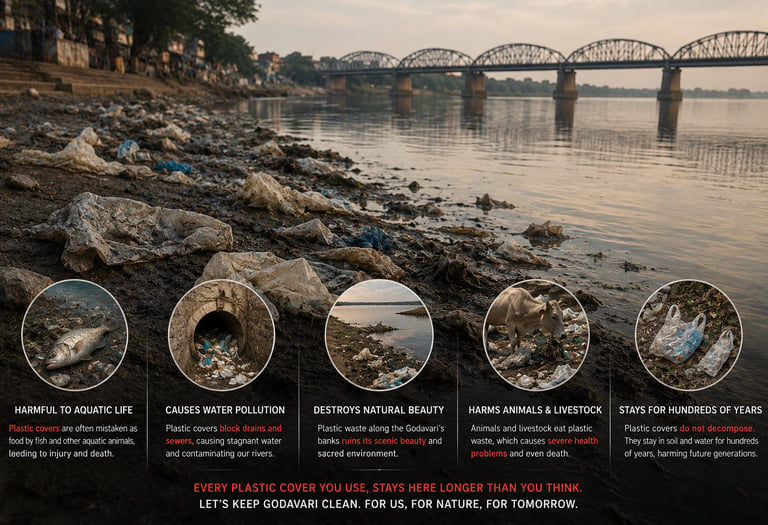
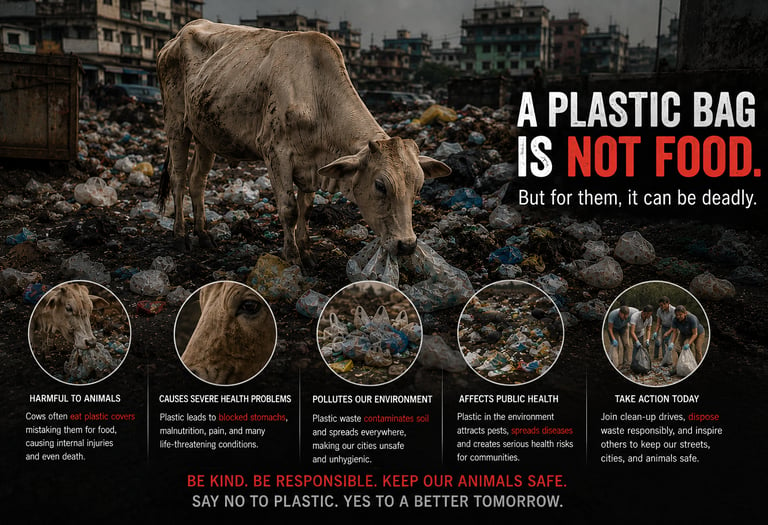
Every day, countless animals wander through garbage dumps searching for food, only to consume plastic waste by mistake. Cows are especially vulnerable, often swallowing plastic bags that can accumulate in their stomachs, causing severe pain, malnutrition, digestive blockages, and even death. Plastic waste not only harms animals but also pollutes our surroundings, contaminates soil and water, and creates long-term environmental challenges. A simple act of responsible waste disposal can make a significant difference. By reducing plastic usage and disposing of waste properly, we can protect innocent animals, create cleaner communities, and build a healthier, more sustainable future for generations to come.
Protecting Our Rivers from Plastic Pollution
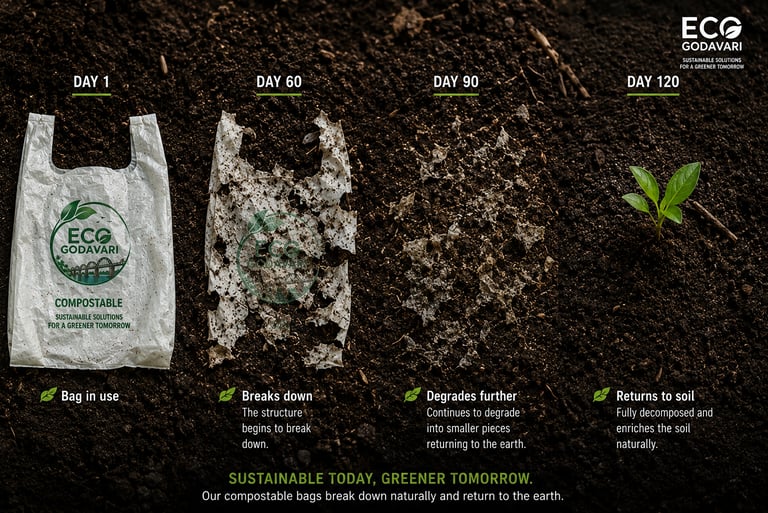
Rivers are the lifelines of our planet, providing water, supporting biodiversity, and sustaining millions of people. However, the increasing use of conventional plastic bags and packaging has become a major threat to these precious ecosystems. Plastic waste often finds its way into rivers, where it harms aquatic life, pollutes water sources, clogs drainage systems, and breaks down into harmful microplastics that persist for decades. These pollutants not only damage the environment but also affect human health and future generations. Choosing ECO Godavari compostable alternatives helps reduce plastic pollution, protects natural habitats, and contributes to cleaner, healthier rivers for a more sustainable tomorrow.